Dzirnavu Street 16/k2, Riga, Latvia
 English
 Latviešu


Qualifications Frameworks – Uniformity and Disparities in Passporting Qualifications
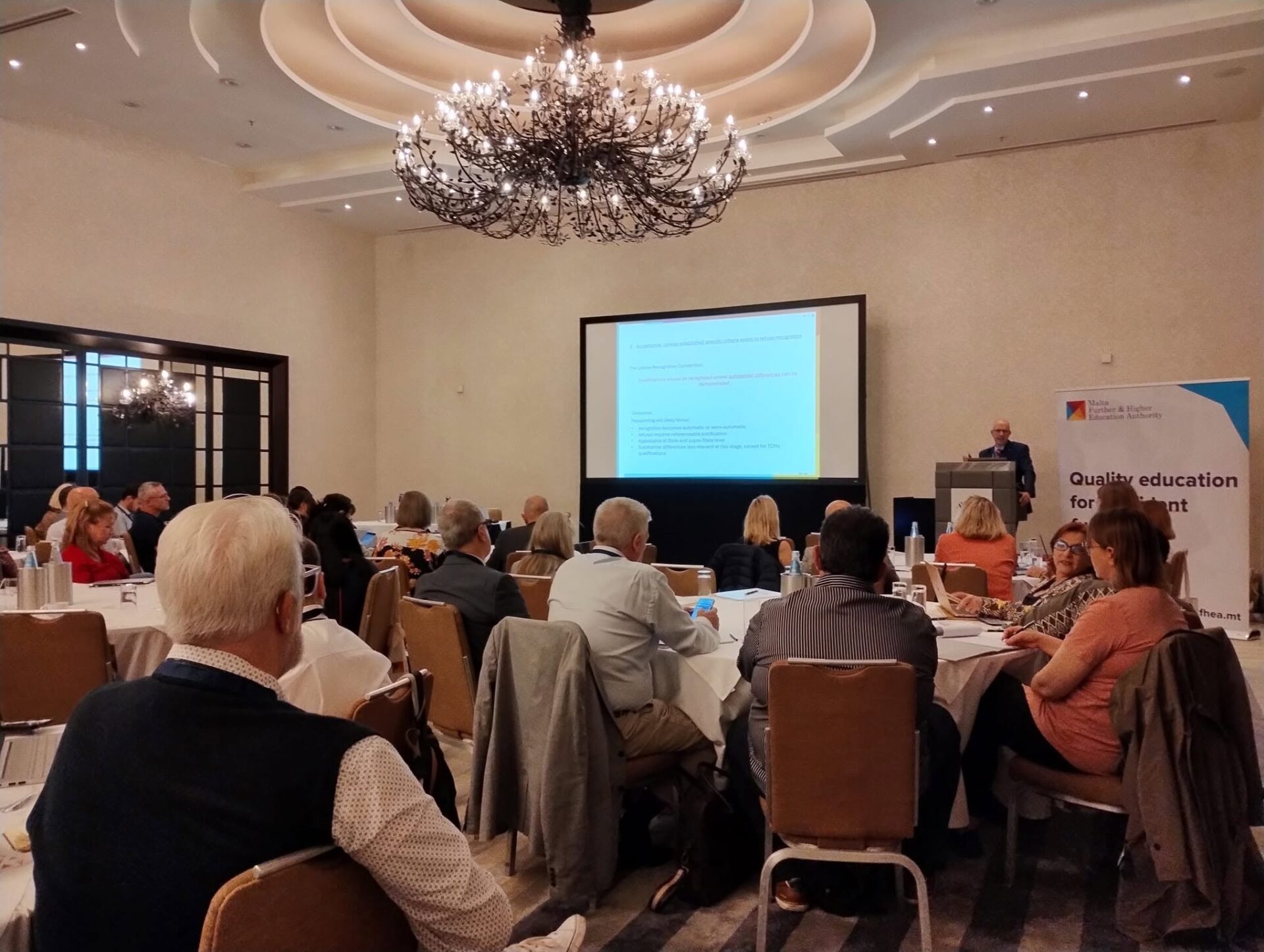
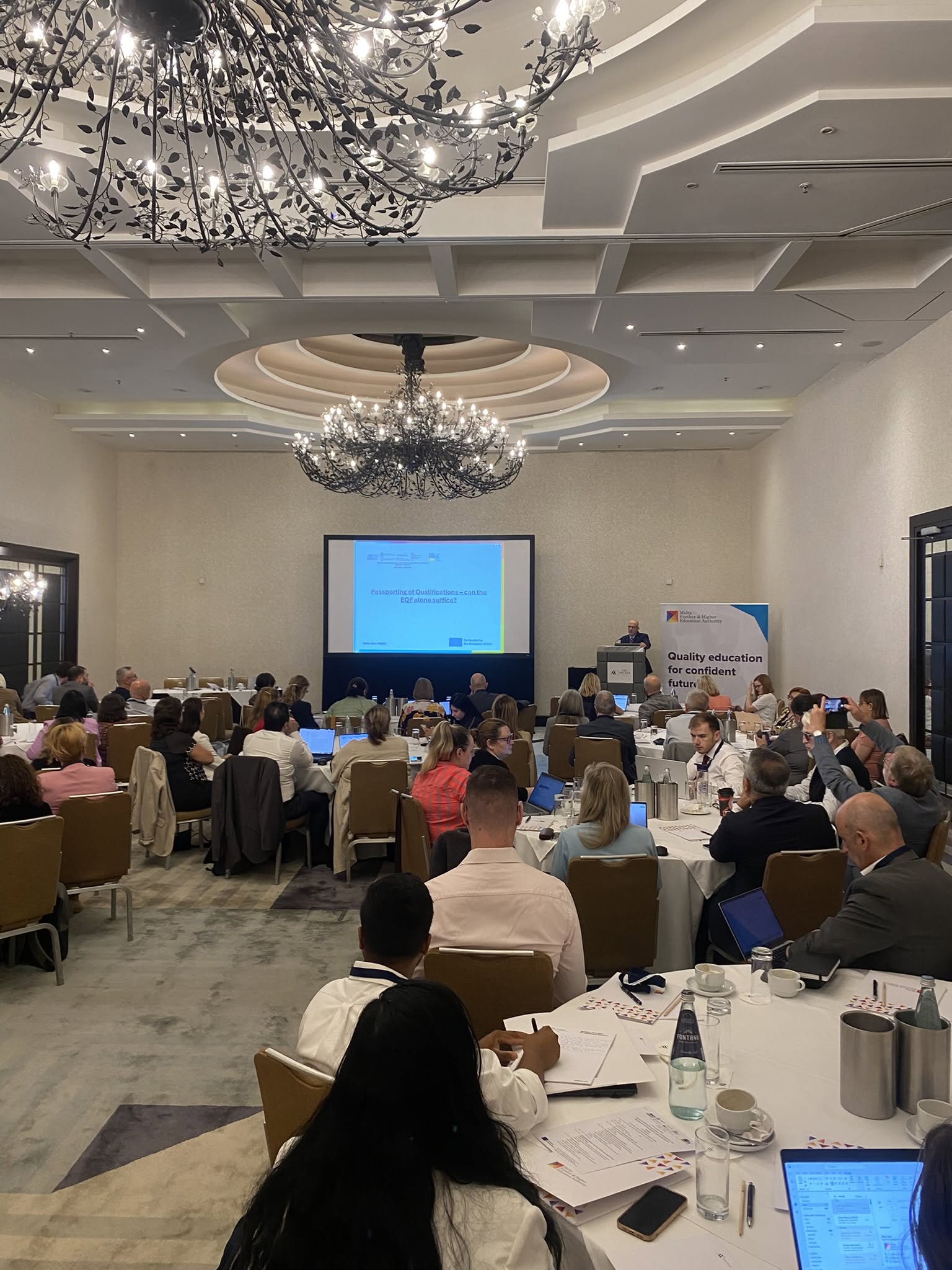
On 27 October 2026, a peer learning activity (PLA) entitled “Qualifications Frameworks – Uniformity and Disparities in Passporting Qualifications” took place in Sliema, Malta. The event was organised within the framework of the Erasmus+ project “Qualifications Frameworks for Trust, Transparency and Diversity – Thematic Peer Group A 2” (QUATRA – TPG A 2). It was hosted by the Malta Further and Higher Education Authority (MFHEA) in cooperation with the Academic Information Centre.
The PLA brought together more than 70 members of Thematic Peer Group A on Qualifications Framework (TPG A), experts and other stakeholders from the EHEA and Malta to discuss the role of qualifications frameworks of higher education in facilitating the passporting of qualifications, their use in cross-border recognition and opportunities to improve mechanisms of automatic recognition of higher education qualifications in Europe.
At the opening of the event, James Perry Maia, CEO of the MFHEA, emphasised the importance of qualifications frameworks in ensuring the transparency and comparability of qualifications. In the context of qualification passporting, clear and reliable information should be provided about the level of a qualification and its learning outcomes, while also taking into account the differences and traditions of national education systems.
The keynote speech, which was delivered by Dr Stefan Sant, representing MFHEA, addressed the concept of qualification passporting and the role of European and national qualifications frameworks (EQF and NQF). The objectives, significance and legal status of the EQF and NQFs were explored highlighting that including qualifications into a NQF that is referenced to EQF or self-certified to the Qualifications Framework of EHEA (QF-EHEA) helps ensuring their comparability across countries, but does not guarantee automatic recognition. The passporting approach would involve greater reliance on information provided by the country awarding the qualification regarding the level, status, quality assurance and learning outcomes of qualifications, potentially reducing the need for repeated individual credential evaluation in certain cases.
The keynote was followed by an overview of recognition practices across the EHEA delivered by Jon Vercellono, MFHEA. Although automatic recognition of qualifications is promoted at policy level, in practice qualifications are still frequently evaluated on an individual basis. Recognition procedures differ between countries, including in terms of the bodies responsible for making decisions on recognition. These responsibilities may lie with higher education institutions, ENIC/NARIC offices, ministries or other public authorities. Key challenges identified included a lack of mutual trust, differences in terminology and insufficient access to information on qualifications. In order to raise awareness of recognition practices, difference between information on comparability of qualifications, piece of advice on recognition and legally binding decisions on recognition should be clearly distinguished for individuals.
Allan Bruun Pedersen, President of the Lisbon Recognition Convention Committee (Denmark), addressed the principle of substantial differences in recognition of qualifications and the role of qualifications frameworks in credential evaluation. The EQF and the QF-EHEA facilitate comparison of qualifications from different countries by providing information about their levels and learning outcomes. At the same time, qualifications placed at the same level of qualifications framework do not necessarily have identical content, workload or associated rights for further education. Recognition of qualifications may also require consideration of the status of quality assurance, workload and profile of qualification, depending on the purpose for which recognition is sought.
The experience of an international higher education institution in the field of qualifications frameworks and quality assurance was presented by Dr Murat Sumer, the International Maritime Law Institute (IMLI) (Malta). Although IMLI as an international education institution does not belong to the national education system, they voluntarily applied for evaluating and referencing their study programmes and qualifications to the Malta Qualifications Framework (MQF). The provided assessment and audits of ongoing study programmes ensured additional information about IMLI’s qualifications; however, the final decision on recognition remains with the competent bodies in the receiving countries.
The following presentations explored the practical use of qualifications frameworks. Clifford Debattista from the European Union Programmes Agency (EUPA) (Malta) outlined the links between the EQF and Europass documents. Standardised structure of Europass documents helps learners and receiving organisations comparing qualifications and transfer information across countries. At the same time, the issuing organisations have to assume responsibility for providing accurate and consistent information about qualification levels and education programmes. Thus, Europass documents may facilitate the portability of information, but do not constitute formal recognition of a qualification. In any case, the Diploma Supplement should include a clear reference both to the NQF level and EQF level, as the levels may use differ.
Ilaria Spiteri Axiak, representing the Maltese consultancy firm MISCO, shared an employer’s perspective on the use of qualifications frameworks at the international level. The employers often face difficulties in understanding qualifications obtained abroad and assessing their relevance to the requirements of a particular vacancy. The EQF level provides initial information about the level of a qualification, while the Diploma Supplement explains the field and content of studies. However, additional information and supporting evidence are needed to assess a candidate’s knowledge, skills and suitability for specific job. An EQF level alone does not verify the authenticity of a credential or institution, guarantee formal recognition or demonstrate a candidate’s suitability for a particular job. Therefore, more attention should be paid to raising employers’ awareness of qualifications frameworks and ensuring their access to reliable sources on qualifications and verification of qualification authenticity.
The experience of Malta in skills assessment and the validation of non-formal and informal learning was presented by Glorianne Cachia from the National Skills Council (NSC). The national qualifications framework describes qualifications and skills across different education sectors, because occupational standards are referenced to the NQF levels. However, setting levels of qualifications, assessment of professional competences and recognition of qualifications involve various objectives and, thus, these processes lead to different outcomes. The assessment and validation of non-formal and informal learning in Malta strongly relies on occupational standards and the quality of competence assessment. The EQF can serve as a common language for comparing qualifications, but it cannot replace recognition procedures and quality assurance mechanisms.
In the final thematic session, Dr Stefan Sant, MFHEA, addressed the legal and governance aspects of the EQF, including initiatives aimed at promoting automatic recognition of HE qualifications in Europe. Several policy documents have been designed and approved in EHEA – the Council Recommendation on automatic recognition (2018), the treaty on automatic recognition between the Baltic and Benelux countries, the UNESCO Global Convention on the recognition of qualifications concerning higher education (2019), and the joint European Degree initiative – aiming to ensure mutual trust and passporting of qualifications. Particular attention was also given to the proposed Skills Portability Act and its potential role in expanding the use of the EQF. Despite various European and international initiatives, a single comprehensive governance system ensuring the consistent implementation and management of the EQF are still lacking. Simultaneously, several challenges were identified concerning the scope of these initiatives, legal and governance issues, implementation costs and the availability of digital tools.
To explore the topics discussed during the PLA, discussions in two groups were held at the end of the seminar. The first group focused on the recognition and passporting of qualifications, as well as on the role of the EQF in these processes. The participants discussed whether qualifications included in an NQF that is referenced to the EQF or self-certified against the QF-EHEA should benefit from facilitated recognition in other EHEA countries. They also considered opportunities to promote more automatic or semi-automatic recognition of qualifications. The second group addressed the governance of qualification recognition, strengthening mutual trust between countries and the role of the working structures of the Bologna Process. The participants also analysed the barriers that hinder the more effective use of qualifications frameworks in facilitating the passporting of qualifications. The discussions confirmed that qualifications frameworks provide a common basis for comparing qualification levels, but their effective use in cross-border recognition requires reliable and accessible information about qualifications, their status and quality, as well as clearly defined responsibilities among the competent bodies.
The PLA provided an opportunity for representatives of different countries and institutions to exchange experiences and consider the opportunities and challenges related to the passporting of qualifications. The qualifications frameworks are important tools for enhancing the transparency and comparability of qualifications. However, their full potential can only be realised through closer cooperation between countries, mutual trust and further improvements in recognition procedures.
Project activities will continue in 2027, with the next PLA scheduled for the end of April 2027 in Belgium. The event will aim to explore practical solutions for promoting more flexible learning pathways in higher education.